

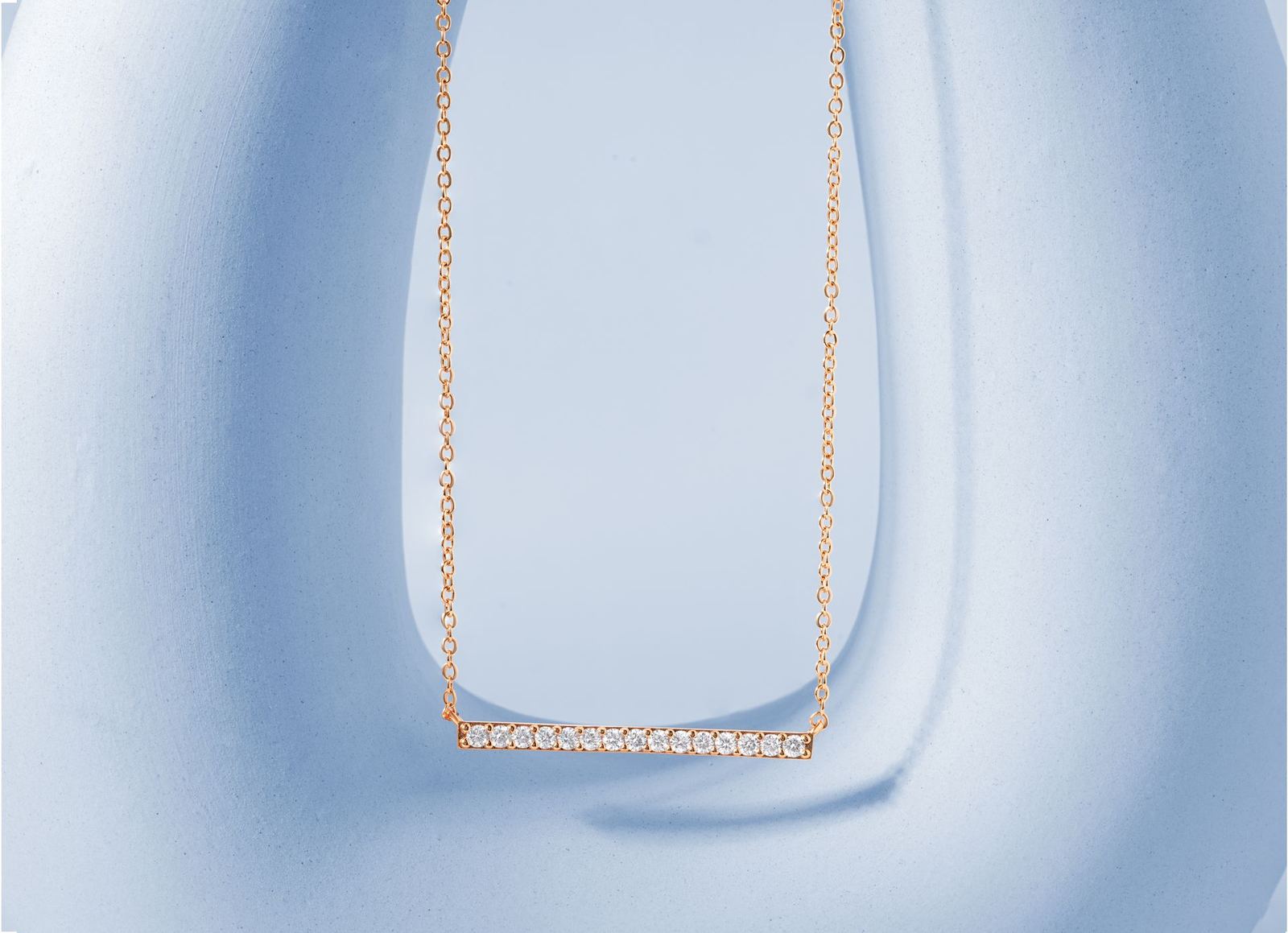
What carat and fineness mean, and which purity suits which jewel.
One of the questions heard most often when buying gold jewellery is "14, 18 or 22 carat?". Carat expresses the proportion of pure gold: 24 carat is entirely pure gold (995 to 999 fineness); in other purities the gold is alloyed with metals such as copper, silver and palladium. The alloy determines hardness, colour and price.
The numbers behind the carat
- 8 carat: 333 fineness (33.3 per cent gold)
- 14 carat: 585 fineness (58.5 per cent gold)
- 18 carat: 750 fineness (75 per cent gold)
- 22 carat: 916 fineness (91.6 per cent gold)
- 24 carat: 995 to 999 fineness, bullion and investment gold
14 carat: durable and economical
With 58.5 per cent pure gold, 14 carat is hard and resistant to scratches. It suits everyday rings, wedding bands and fine chains. If you have allergic skin, ask for a nickel-free alloy; in our atelier all 14 carat pieces are made nickel-free.
18 carat: the jewellery standard
Jewels with diamonds and precious stones are mostly made in 18 carat. The higher gold content gives a richer colour and a sturdier setting for the stones. White gold, also made in 18 carat, is whitened with rhodium plating; the yellowing of white gold over time comes from that plating wearing off and can be renewed free.
22 carat: traditional and held for value
22 carat is common for wedding jewellery, bangles and dowry gold. The gold content is high and the colour a deep yellow, but the metal is soft. It is not suited to stone setting and is preferred in plain, heavy pieces. When bought as an investment, workmanship may be deducted on buy-back, so pieces with high weight and low workmanship stand out.
Which purity for which jewel?
For an everyday wedding band 14 or 18 carat, for a diamond solitaire 18 carat or platinum, and for bangles and dowry gold 22 carat are fitting. Rose gold, thanks to its higher copper content, gives a sturdy warm tone even at 14 carat.
Check the hallmark
Every gold jewel should bear a purity hallmark (for example 585, 750, 916) and a maker's mark. Showing the hallmark under a loupe is the boutique's duty. The weight on the certificate and invoice should also match the scale.
With our gold price calculator you can see the approximate selling price from the grams, purity and workmanship rate, and estimate the buy-back value of your old gold.
What is in the price?
The price of a gold jewel has three parts: the metal value (grams × purity × the current gold price per gram), workmanship and, if any, stone cost. Workmanship is around 8 to 12 per cent on a plain chain and can rise to 25 to 40 per cent for handwork and filigree. When comparing, look not only at the total price but at the grams and the workmanship rate.
Buy-back
When you bring old gold to our boutiques, weighing and purity analysis are done before your eyes; a buy-back offer of 95 to 98 per cent of the current rate is given, or the amount is deducted from the price of a new piece.
Related Posts
Buying a Diamond: The Four Cs of Carat, Colour, Clarity and Cut
The four criteria that set a diamond's price and where to spend your budget.
Read More
How to Measure Ring Size: Five Steps at Home
Practical and accurate ways to measure ring size at home, even for a surprise gift.
Read More